
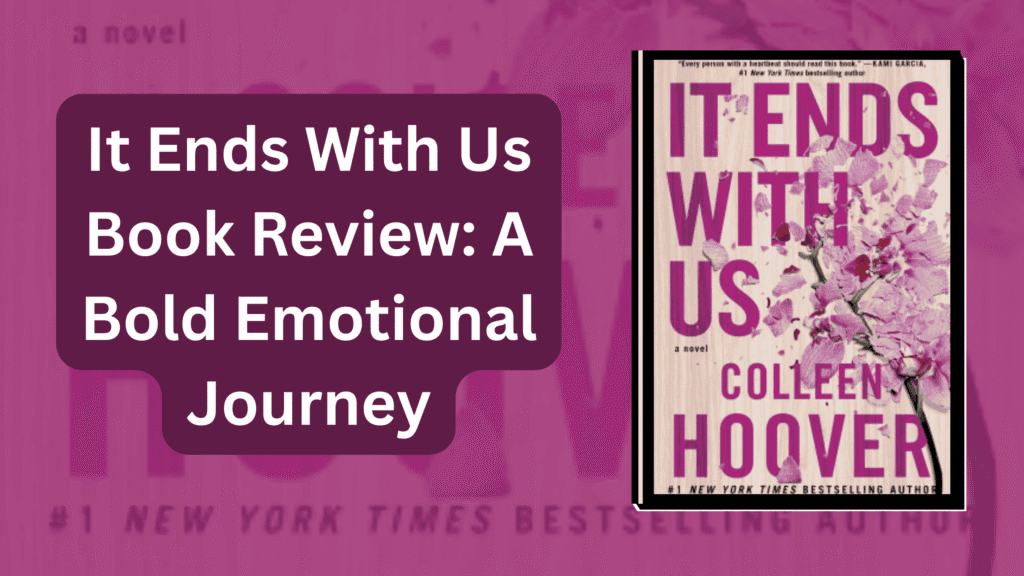
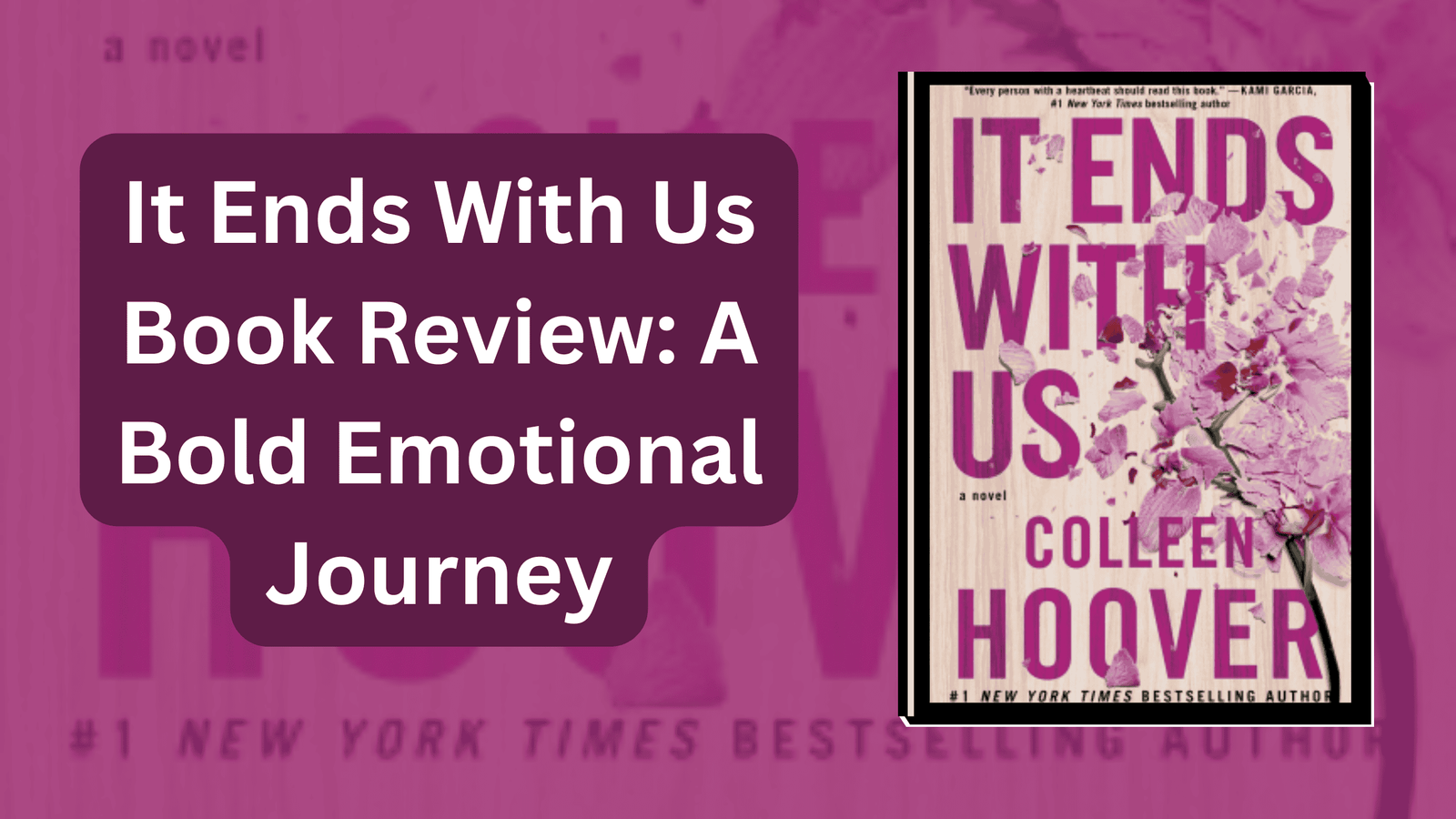
Title: It Ends With Us
Author: Colleen Hoover
Published: 2016
Publisher: Atria Books
Pages: 376
Format: Paperback
Genres: Fiction Romance, Contemporary, Drama, Emotional, Psychological Fiction
Buy Book
About Author
When I think about Colleen Hoover, what stands out most is how her writing began with genuine passion rather than fame. Back in November, 2011, she started her debut novel, Slammed, inspired by an Avett Brothers song—Head Full of Doubt/Road Full of Promise. Those lyrics became the spark that set her path as a storyteller. By January, 2012, she self-published the book on Amazon Kindle, wanting to share it simply with her mother. Soon after, blogger Maryse Black gave it five stars, and by August, 2012, Atria Books picked it up for wider release. Her follow-up titles like Point of Retreat in February, 2012, and This Girl in April, 2013, proved she had a natural ability to connect emotionally with readers.
Her storytelling deepened with Hopeless in December, 2012, which reached #1 on The New York Times Best Seller list and stayed there for three weeks. The paperback and epilogue additions in Losing Hope and Finding Cinderella (a 2014 novella) built her world even further. I still remember reading Maybe Someday in March, 2014, where Griffin Peterson’s soundtrack, linked through a QR code and website, made the music part of the reading experience. Her collaboration with Tarryn Fisher on Never Never—about Silas and Charlie, their lost memory, lies, secrets, and the fragile truth of their relationship—showed her willingness to take risks, writing in alternating chapters and making real-time edits as the story unfolded.
Then came 2016, and with it, It Ends With Us—her hardest book, drawn from her mother’s experience with domestic abuse. Through Lily, the novel confronts violence, broken relationships, and the strength of victims who try to break the cycle of abuse. By 2019, the book had sold over a million copies in twenty languages, and thanks to BookTok and TikTok, it climbed back to #1 on The New York Times Best Seller list in January, 2022. The film adaptation, directed by Justin Baldoni, premiered in August, 2024, earning over $250 million worldwide—a huge commercial success. Its sequel, It Starts With Us, released on October, 18, 2022, through Atria Books, Simon & Schuster, and Simon & Schuster UK, became the most-preordered novel in their history, backed by a massive marketing campaign. Despite a backlash in January, 2023 over a coloring book tied to the subject matter, Hoover’s influence only grew. With over 20 million books sold by October, 2022, she remains a best-selling novelist whose audience stretches far beyond the United States, capturing hearts through her emotional inspiration, authenticity, and courage to tell stories that matter.
Book summary
It Ends With Us by Colleen Hoover is a powerful and emotional story that follows Lily Bloom, a young woman who falls in love with the charming and successful Ryle Kincaid. As their relationship deepens, Lily begins to see darker sides of Ryle that remind her of her father’s abuse toward her mother, forcing her to confront painful memories of her past. The novel beautifully weaves Lily’s struggle between love and self-respect, as she faces the heartbreaking decision of whether to stay or break free from a cycle of domestic violence. Through raw emotion and honesty, Hoover delivers a deeply moving story about strength, healing, and the courage it takes to choose yourself—even when it hurts the most.
Plot
The plot of It Ends With Us by Colleen Hoover unfolds like an emotional storm that slowly builds into something deeply impactful and unforgettable. Through her unique storytelling, Hoover brings readers into the world of Lily Bloom, a young woman from a small town in Maine, who moves to Boston with dreams of building a new life. Her journey begins with hope, ambition, and a desire to leave behind painful memories tied to her father, her mother, and the cycle of domestic abuse that shaped her childhood.
Lily opens her own flower shop, an act that symbolizes her growth, resilience, and self-discovery. She wants to create beauty in a world that once caused her pain, and that small act of independence becomes one of the novel’s most meaningful themes. Her life takes a turn when she meets Ryle Kincaid, a charming neurosurgeon whose confident and mysterious personality immediately catches her attention. Their romance begins with a spark—one that feels electric and full of promise, but also tinged with unspoken questions.
At first, Ryle seems perfect — intelligent, passionate, and driven. But beneath that perfection lies a hidden aversion to long-term relationships. As their connection deepens, readers start to feel a rising tension between the intoxicating pull of love and the quiet undercurrent of trauma. Hoover captures this conflict with such authenticity that it feels almost personal, almost like you’re reading someone’s journal.
Then comes the reappearance of Atlas Corrigan, Lily’s first love and the one person who once acted as her protector during her most vulnerable years. The flashbacks to her teenage life in Maine reveal their touching and bittersweet relationship. Through letters to Ellen, a quirky yet emotional device, we witness Lily’s vulnerability, her honesty, and her longing for connection. These letters serve as windows into her past, helping us understand the emotional depth behind her choices in the present.
When Atlas returns to Lily’s life, the story’s emotional complexity intensifies. His presence awakens old feelings, unfinished grief, and unresolved forgiveness. He represents hope, healing, and the possibility of redemption, while Ryle embodies passion, control, and pain. The love triangle between them isn’t built on cliché—it’s rooted in realism and moral themes that explore what it means to love someone who also hurts you.
As Lily’s relationship with Ryle evolves, readers begin to see the subtle signs of abuse—the jealousy, the rage, and the chilling pattern of control that mirrors what Lily once saw in her father. The narrative arc builds with heartbreaking precision, forcing both Lily and the readers to confront uncomfortable truths about love, boundaries, and self-worth. This is where Hoover’s emotional writing truly shines: she doesn’t sensationalize domestic violence, she humanizes it. She shows how easily victims can become trapped between fear, forgiveness, and hope.
As I was reading, I found myself reflecting on how Colleen Hoover uses her fiction not just to tell a story, but to start a conversation. The book’s emotional resonance comes from its raw honesty—its refusal to shy away from the heavy topics of physical abuse, trauma, and mental health. It’s a women’s fiction novel that empowers through vulnerability, revealing how healing and understanding can grow from even the most painful experiences.
Lily’s decisions become the heart of the narrative. When she finally recognizes the abuse cycle she’s trapped in, she has to make the hardest choice of her life — to end it. That moment of courage is where the title, It Ends With Us, finds its full meaning. It’s about ending the cycle, protecting the next generation, and reclaiming self-worth. It’s a reflection of inner strength, bravery, and empowerment, all of which make this book more than just a romance — it’s a powerful story about survival and resilience.
The emotional storytelling is heightened by Hoover’s ability to mix hope with heartbreak. Even as Lily’s world falls apart, there’s always a quiet sense of transformation, of something new waiting beyond the pain. Hoover’s writing makes readers feel both the grief of loss and the peace that comes with letting go. It’s a reflection of how life’s hardest lessons can also bring healing and understanding.
By the time the author’s note arrives, revealing that the story was inspired by Hoover’s mother’s story, the book takes on another layer of authenticity. It’s not just a fictional tale—it’s a literary reflection of real women’s experiences. Knowing that made me see the entire journey differently. It’s what gives the book its emotional impact, its moral strength, and its lasting connection with readers.
The themes of forgiveness, trust, and independence run through every page. Each relationship—whether between Lily and Ryle, Lily and Atlas, or Lily and her mother—adds a new perspective on love, loss, and growth. The plot balances tension and introspection, pulling readers into every moment of Lily’s emotional journey.
This is what makes It Ends With Us so compelling. It isn’t just a bestseller or a BookTok trend; it’s a powerful piece of contemporary literature that captures the emotional depth of human relationships. It challenges readers to think about boundaries, healing, and the quiet bravery it takes to choose yourself after years of pain.
Every character in the story—Lily, Ryle, Atlas, and even Lily’s parents—serves a symbolic role. They represent the many shades of love, from toxic relationships to healthy ones, from grief to growth, from loss to hope. The symbolism of the flower shop—a place of rebirth and beauty—stands as a quiet reminder that even after trauma, life can bloom again.
When I think about this book review as a reader, I realize that It Ends With Us isn’t just another contemporary romance; it’s a journey of self-realization and healing. It captures the authenticity of women’s fiction and the powerful emotions that define it. It’s no surprise that this book became a viral, highly rated, and trending success on BookTok, sparking curiosity, interest, and countless recommendations around the world.
I gave it 5 stars in my own review system, not because it’s flawless, but because of its emotional impact, its literary quality, and the honesty of its narrative strength. It’s one of those stories that stay with you long after you close the book — a reflection of life, courage, and the quiet power of choosing peace over pain.
Best Quotes
It Ends With Us Movie Review
Watching the movie version of It Ends With Us felt like seeing a beloved book come alive through a new lens. The production had a long pause during the WGA and SAG strike in 2023, but the UPDATE on IMDB.com finally showed it was worth the wait. Sitting in the theater last night, I could feel how the story touched both younger people and older people alike. Some scenes made the audience gasp, while others drew soft giggles, showing how powerful and emotional this romance still is.
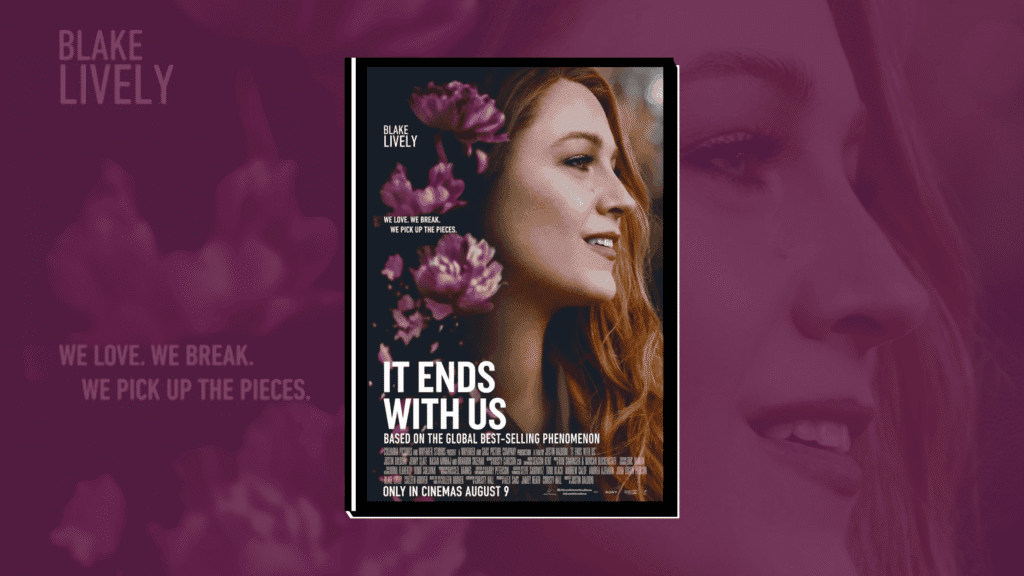
What surprised me was how Hollywood managed to turn a deeply emotional story into something more sensical and appealing without losing its heart. The director and writer did a superb job shaping plots, subplots, and themes into a more slimmed down and simplified form. As someone who loved the book, I found the tone of the movie a bit different—less cheese, more depth. It might even be better than the book for those who prefer balance over heartbreak. The movie-making choices gave it nuance and complication while keeping the rom-com spirit alive, turning it into a romantic classic for a new era of romantic movies.
The performances were heartfelt—Lily’s acting showed both tear and strength as she faced domestic abuse and love’s twist in a typical romance setting. Her mom, husband, and the main men each brought different physiques, emotions, and situations that added realness to the whole story. The wardrobe—from chemises, heels, to coveralls—felt symbolic, reflecting her transformation. Watching The Starving Artist scene made me reflect on the good ol’ days of romantic roles, when actors’ careers were defined by heartfelt words and raw scenes. By the weekend, the film was selling out across screens, proving that a story with high standards of emotion and honesty can still move three people or three hundred to tears—and that’s the greatest relief for any storyteller.
Overall Conclusion
The overall conclusion of It Ends With Us is both heartbreaking and empowering. It shows how love can be beautiful yet painful, and how choosing yourself is sometimes the bravest act of all. Lily’s journey—from falling in love to facing domestic abuse—teaches that breaking a cycle takes courage, not weakness. The story reminds readers that even when life feels impossible, healing begins with self-respect and the strength to say “enough.” It’s a powerful ending that turns pain into growth and makes the message of resilience stay long after the last page.
4 thoughts on “It Ends With Us Book Review: A Bold Emotional Journey”