
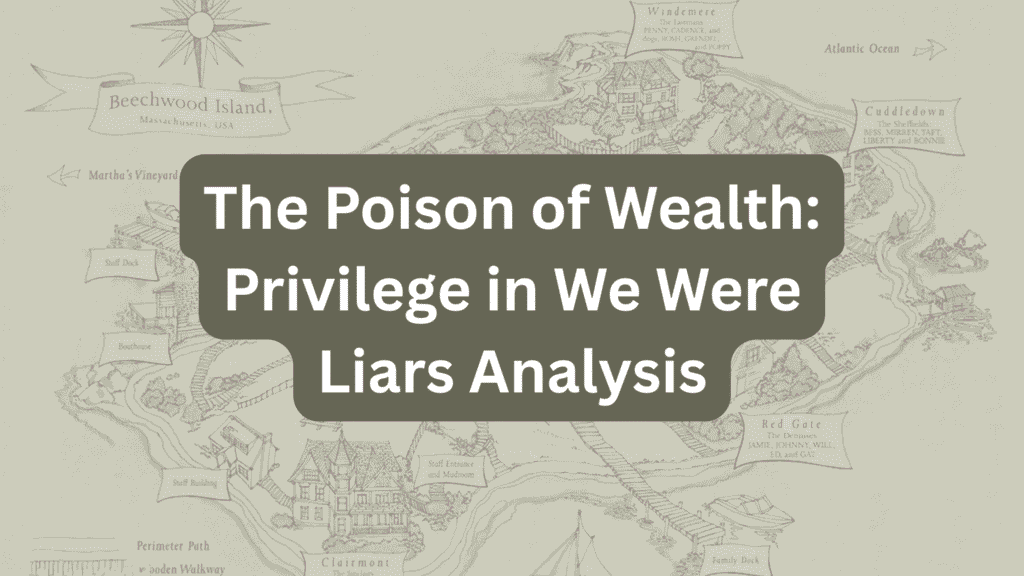
I.The enduring fantasy of the “American elite” a life defined by pristine homes, endless summers, and flawless appearances often masks a far darker reality. In privileged communities, the relentless pressure to maintain an illusion of perfection forces deep family secrets and generational trauma beneath the surface. This insidious dynamic is chillingly explored in E. Lockhart’s novel, We Were Liars. The story centers on the Sinclair family, the quintessential old-money elite who retreat to their private Beechwood Island every summer. Their inherited wealth is presented as a shield against the world’s problems, yet this facade of flawless privilege is deeply fragile. Ultimately, the Sinclairs’ unchecked, generational privilege does not bring happiness; instead, it fosters a toxic environment of entitlement, greed, and moral blindness. This rot precipitates a horrific tragedy, revealing the family’s underlying moral bankruptcy and leading directly to the self-destruction of its young generation, the Liars.
The Privilege of Appearance and Exclusion
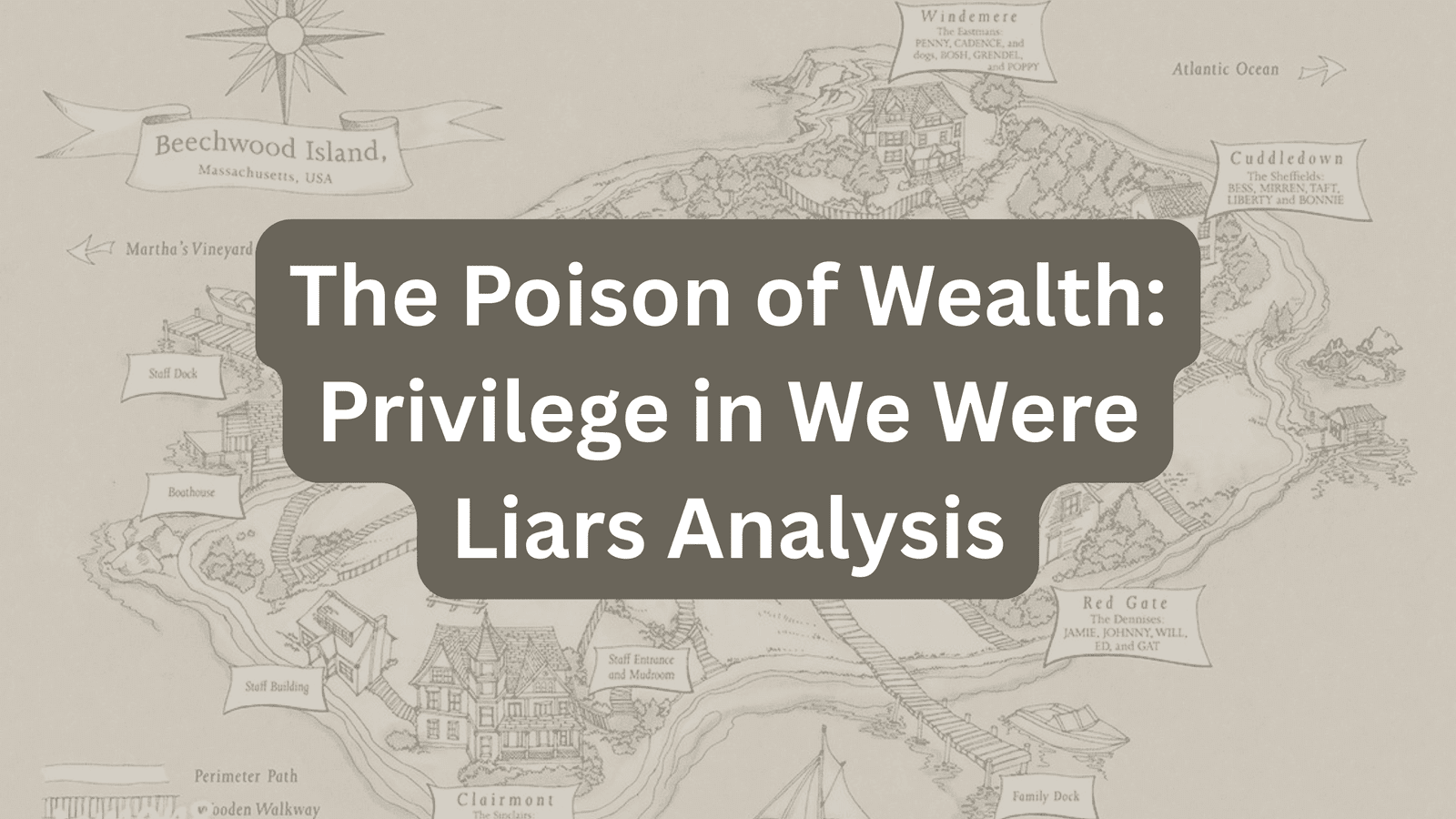
The most immediate manifestation of the Sinclair family’s corrosive privilege is the exclusive, self-contained world they construct on Beechwood Island, which serves to insulate them from genuine human experience and foster inherent bigotry. This geographic and social isolation is maintained through the family’s mantra of being “beautiful, privileged, and above reproach,” creating a false bubble where their rules are the only ones that matter. Within this gilded cage, the Sinclairs’ wealth provides a moral detachment, allowing them to ignore the realities of the world. Crucially, this insulation quickly curdles into overt classism and covert racism, most notably exposed through the character of Gat Patil. As the “outsider” who challenges their worldview, Gat’s very presence as the nephew of Carrie’s boyfriend, Ed is treated as an inconvenience to the family’s perfect aesthetic. Patriarch Harris Sinclair’s subtle yet profound prejudice toward Gat and Ed exposes the deep-seated bigotry hidden beneath the family’s superficial, liberal façade. This need for control is rooted in maintaining the appearance of perfection; the pressure to be a flawless “Sinclair” and avoid any visible “mistakes” forces deep emotional suppression and a destructive culture of lies. By prioritizing the flawless façade of their social status over authenticity and basic acceptance, the family uses its wealth not for genuine connection, but as a weapon of exclusion, setting the stage for the disastrous events to come.
Generational Greed and the Erosion of Familial Love
The Sinclairs’ vast wealth, particularly the lure of inheritance, transforms familial bonds into a cutthroat competition for material possessions and the controlling approval of the patriarch. This financial control replaces genuine affection with calculation.
Patriarch Harris Sinclair uses his trust funds, houses, and possessions as calculated leverage, constantly manipulating his daughters Penny, Carrie, and Bess and actively pitting them against each other like the cruel fathers in Cadence’s cynical fairytales. He demands their performance of “Sinclair perfection” in exchange for financial security.
The aunts’ ruthless arguments over Tipper’s possessions and their desperate craving for Harris’s favor reveal that their love has been tragically monetized, reducing complex family relationships to a purely transactional system of reward. Materialism has commodified their affection, making loyalty conditional on inheritance.
Consequently, the Liars inherit not just money, but a “rotten emotional structure” built on rivalry and materialism. Their desperate, reckless act of rebellion the attempt to burn down Clairmont is a tragic, albeit misguided, attempt to cleanse the family house of this pervasive greed and the “Price of Possessions.”
The Corrupting Outcome: Self-Destruction and Moral Blindness
The Liars’ ultimate, destructive act is not a random tragedy but the logical and tragic conclusion of their family’s toxic, unchecked privilege, demonstrating the cost of moral blindness. Their decision to burn down Clairmont is a misguided, symbolic act of rebellion intended to purge the family of its corrosive greed and destroy the very nucleus of their emotional corruption, as Cadence mused: “What if we made a mess so big only a Sinclair could clean it up?”
Even in her suffering and quest for truth, Cadence is initially blind to her own inherited entitlement and selfishness, focusing only on the obvious flaws of Harris and Penny; she must first acknowledge the “worst Sinclair qualities” inherited in herself to truly begin healing. This realization forces Cadence to confront her own moral complicity in the system that led to the deaths of her cousins and Gat.
Cadence’s ultimate act of healing giving away her possessions and rejecting the “fairy tale” narrative serves as her personal redemption through rejection of materialism. It is a powerful, affirmative rejection of the material corruption that defined her family, purchased at the devastating and irreparable cost of the lives of her loved ones.
Conclusion
In conclusion, E. Lockhart’s We Were Liars functions as a modern American tragedy, powerfully demonstrating that the Sinclairs’ inherited, unchecked privilege acts as a corrosive force that is fundamentally incompatible with love and moral integrity.
This self-imposed privilege first manifested in the geographic isolation and social exclusion of Beechwood Island, which exacerbated the family’s generational greed through the weaponization of inheritance, reducing familial bonds to transactional competition.
The resulting self-destruction was thus not an accident but the logical outcome of a toxic system built on lies and wealth. The novel ultimately rejects the fantasy of the flawless, wealthy American family, serving as a cautionary tale that unchecked material obsession does not protect a family, but rather guarantees its devastating and complete ruin.
Continue Reading
For a comprehensive exploration of the novel, including plot analysis, character dynamics, and discussion of the famous plot reveal, these articles delve deeper into E. Lockhart’s world and its themes.
- We Were Liars Review: Was the Shocking Twist Worth It?
- The Liars’ Secret: Unmasking the Sinclair Family Tragedy
- Sinclair Family Tree: We Were Liars’ Inheritance Conflict
- We Were Liars Ending Explained: Book Twist vs. TV Show
- We Were Liars Ending: The Devastating Twist Revealed
- Beechwood Island as a Microcosm: Setting, Isolation, and Moral Decay in Modern YA
- This Is Happiness Book Review: Niall Williams’ Beautiful Novel About Rain, Love, and Rural Ireland
- The Wild Robot Review: Why This Book Will Make You Cry


6 thoughts on “The Poison of Wealth: Privilege in We Were Liars Analysis”