
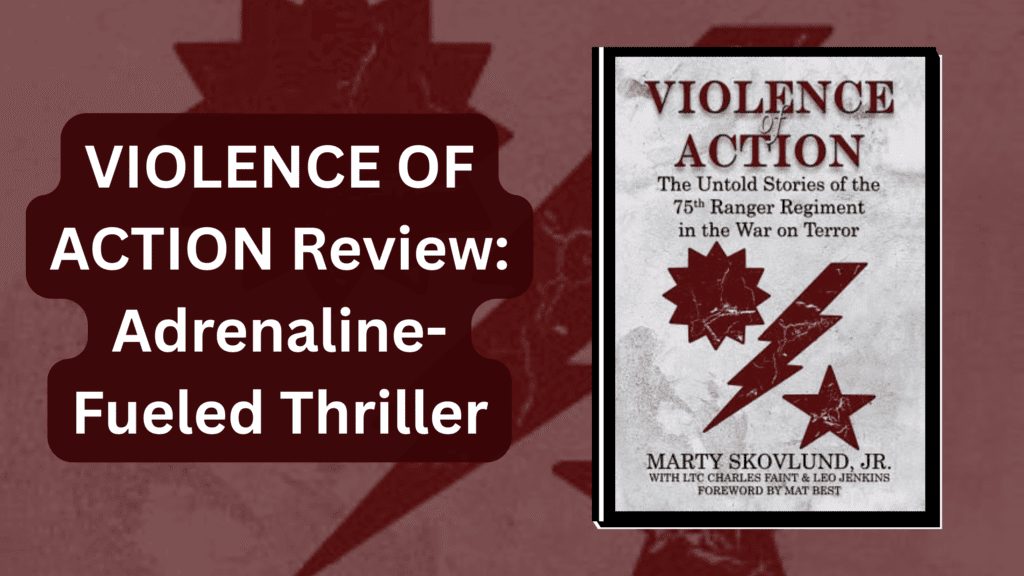
This book is a raw collection of first-person accounts from the elite 75th Ranger Regiment during the Global War on Terror (2001-2011). It offers an unfiltered, boots-on-the-ground look at harrowing combat missions, intense camaraderie, and the psychological realities faced by U.S. Army Rangers in Iraq and Afghanistan.
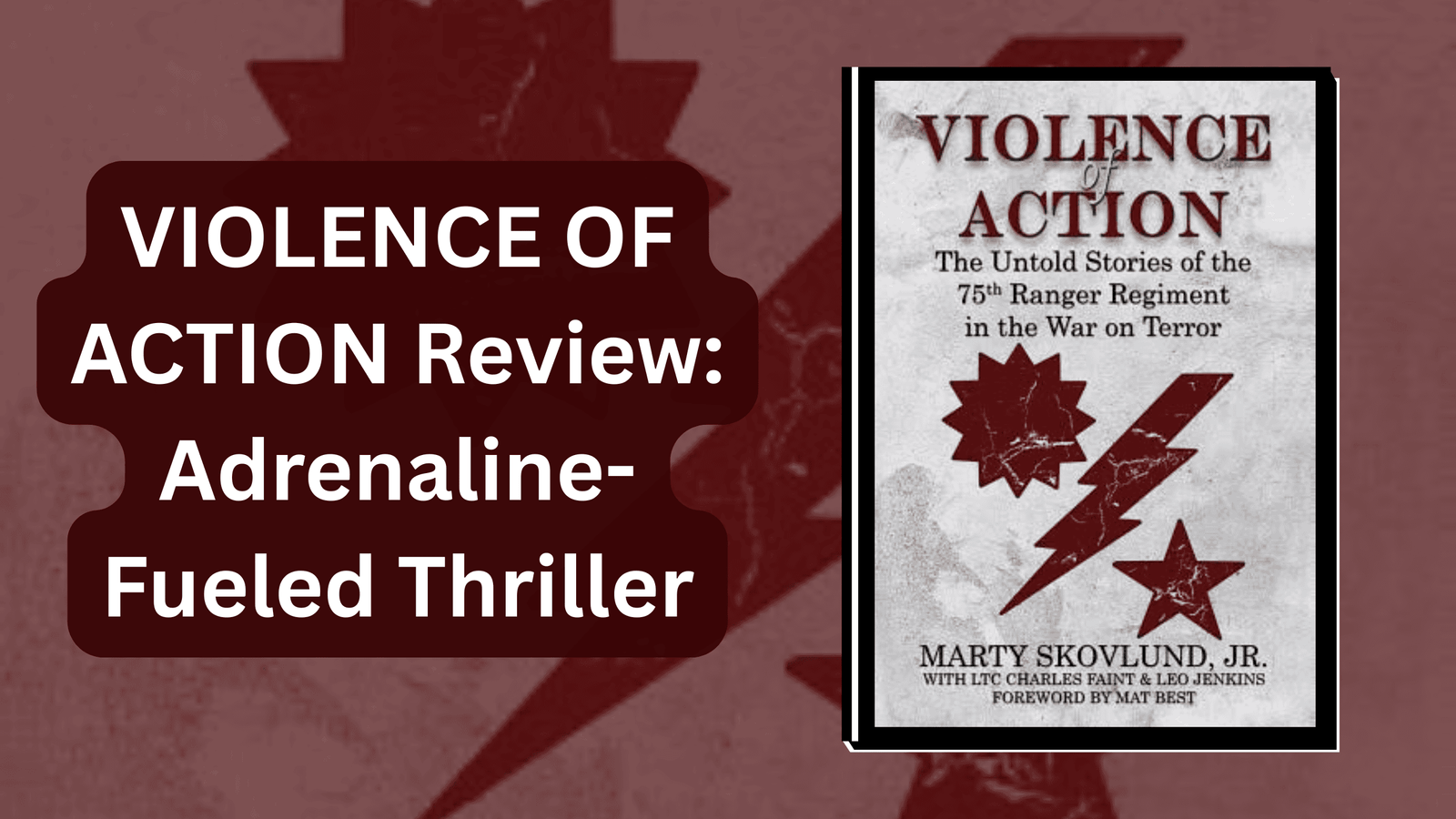
This book, Violence of Action: The Untold Stories of the 75th Ranger Regiment in the War on Terror, is not a typical narrative memoir but a powerful collection of raw, first-person accounts from dozens of U.S. Army Rangers and those connected to them (including wives and a Gold Star mother). It provides an unfiltered, boots-on-the-ground look at the most intense and pivotal missions the 75th Ranger Regiment executed between 9/11 and 2011, detailing everything from the famous recovery of Jessica Lynch to the hunt for Zarqawi. By foregoing the usual chapters on training and history, the book delivers a relentless focus on high-stakes combat, the intense loyalty of brotherhood, and the profound psychological costs of America’s longest war.
My personal experience with this book was emotionally overwhelming, yet deeply satisfying. Unlike heavily redacted or ghost-written accounts, Violence of Action feels profoundly authentic; you can practically smell the dust and feel the adrenaline in the accounts of combat jumps and direct action raids. What stood out to me most was the honesty not just about the heroism, but about the darker side of war and the challenges faced by families back home. It serves as an essential, non-romanticized document of courage and sacrifice that truly honors the meaning of the Ranger Creed.
Overall Rating: 4.5 / 5 Stars
Book Details
Book Title: Violence of Action: The Untold Stories of the 75th Ranger Regiment in the War on Terror
Authors: Marty Skovlund Jr., Charles Faint, and Leo Jenkins
Genre: Non-Fiction / Military History / Memoir (First-Person Accounts)
Publisher: Blackside Concepts / A15 Publishing
Publication Date: September 15, 2014 (Original Release)
Pages: 404–538 pages (Varies by edition)
Ideal Age Range: Adult (Due to mature, unvarnished combat content)
Spoiler Free Summary
This extensive collection of first-person accounts immerses the reader into the high-octane world of the 75th Ranger Regiment during the Global War on Terror, spanning the decade from 9/11 to 2011. The setting is volatile and global, shifting rapidly from the austere mountains and treacherous caves of Afghanistan to the dense urban sprawl and chaotic streets of Iraq. This book bypasses typical military history, instead delivering the immediate, granular reality of combat as experienced by the Rangers the elite unit often deployed on the most complex and time-sensitive direct action raids.
The main conflict is not a single storyline, but a relentless series of existential battles against a shadowy, adaptive enemy. Each account is a self-contained conflict where the Rangers must leverage their specialized training speed, surprise, and overwhelming force (the very definition of “violence of action”) to neutralize high-value targets. The stakes are acutely personal in every chapter; failure doesn’t just mean a missed target, but immediate injury, capture, or the loss of a Ranger buddy, which is repeatedly cited as every soldier’s greatest fear. The book lays bare the intense pressure cooker of operating under extreme secrecy and the psychological toll this lifestyle takes.
The narrative features seminal missions that defined the war, including the seizure of Objective Rhino, the Haditha Dam operation, and pivotal roles in the hunt for leaders like Zarqawi. The stakes are constantly escalating, as the Rangers execute dangerous air assault missions and room-to-room combat, maintaining the reputation of their Regiment as the ultimate direct-action raid force. The accounts are raw, unvarnished, and frequently jarring, illustrating the unbreakable bond of brotherhood, the dark humor used to cope with constant stress, and the moments of profound sacrifice that underpin their daily reality, all building toward the final reflections on their ultimate costs.
Character Breakdown
1. The Protagonist: The U.S. Army Ranger (Collective)
- Identity: This is the core “character” of the entire book. It is the 75th Ranger Regiment as a whole, viewed through the lens of its individual members.
- Role: The Ranger is portrayed as the ultimate Direct Action Operator disciplined, highly trained, and mentally resilient. Their central role is executing the most dangerous, time-sensitive missions in the Global War on Terror.
- Conflict: They face external threats from the enemy and internal conflict dealing with constant stress, fear, loss, and the moral ambiguities of war.
2. The Narrators: The Storytellers (The Authors & Contributors)
Identity: Dozens of active-duty and veteran Rangers, specialized medics, and officers who share their personal stories. The main editors/authors (Marty Skovlund Jr., Charles Faint, and Leo Jenkins) act as curators.
- Role: To provide unfiltered authenticity. Each narrator offers a unique, compartmentalized view of the same war, ensuring the book avoids a single, heroic viewpoint.
- Conflict: Each is struggling with memory, trauma, and the process of translating their harrowing experiences into meaningful words for a civilian audience.
3. The Supporting Cast: The Ranger Brotherhood
- Identity: The fellow soldiers who fight alongside the narrators the Ranger Buddies.
- Role: They serve as the foundation of comradeship and loyalty. They are the source of dark humor, absolute trust, and the central motivation (ensuring their survival) for many of the narrators’ actions.
- Conflict: Their primary conflict is survival and the shared grief when one of them falls in battle, which often drives the emotional climax of individual accounts.
4. The Home Front: The Wives and Mothers
- Identity: The wives, girlfriends, and mothers of the Rangers, including a notable Gold Star Mother (a parent who lost a child in service).
- Role: They provide the essential civilian perspective and the human cost of the “Violence of Action.” They articulate the emotional and logistical burden of constant deployments, fear, and raising children alone.
- Conflict: Their conflict is the silent, perpetual anxiety and the struggle to maintain a functional family life while their loved one is in harm’s way, and the immense grief of loss.
5. The Antagonist (Implied): The Enemy
- Identity: Al-Qaeda, the Taliban, and various insurgent groups in Iraq and Afghanistan. They are often referred to generically as the “HVT” (High-Value Target) or “the enemy.”
- Role: They serve as the relentless external threat that justifies the Rangers’ existence and their missions.
- Conflict: While essential to the plot, they are rarely personalized; their role is to pose tactical challenges and military threats that the Rangers must overcome.
Key Themes & Messages
This section provides an analytical look at the core themes and enduring messages conveyed by the collection of first-person accounts in Violence of Action.
The Unbreakable Bond of Ranger Brotherhood
This is arguably the most dominant theme across all accounts. The book constantly emphasizes that the primary motivation for every Ranger, even above official mission objectives, is the protection and survival of the man next to him. The concept of brotherhood is portrayed not as a sentimental ideal, but as a hard, operational necessity forged in the extreme stress of constant combat. It explores how this shared, intense experience creates a bond that transcends family and civilian life, leaving an indelible mark on their identity, and demonstrating that loyalty and unit cohesion are essential for survival in high-stakes environments.
The Psychological and Emotional Cost of Conflict
The book is unflinching in its portrayal of the high cost of the War on Terror, providing essential analytical depth . It moves beyond battlefield heroism to explore the post-combat reality the weight of loss, the struggle to decompress, and the effects of repeated exposure to extreme violence. It features the perspective of Ranger wives and Gold Star Mothers who articulate the civilian side of the psychological toll: the constant anxiety of deployment, the challenges of reconnection, and the devastating, long-term impact of invisible wounds. The central message is that true courage includes acknowledging and struggling with the psychological realities of war.
Violence of Action vs. Measured Restraint
The title itself speaks to a key tactical and philosophical theme. “Violence of Action” (rapid, aggressive, and overwhelming force) is presented as the default, necessary mindset for the Ranger Regiment to achieve mission success and ensure safety during direct-action raids. However, the narratives often place this aggressive operational concept in tension with the necessary measured restraint required to minimize collateral damage and maintain ethical standards in complex operational environments. The stories reveal the constant, razor-thin line these operators must walk between lethal efficiency and morality, highlighting the professional discipline required to wield extreme force responsibly.
The Legacy of Sacrifice and Remembrance
The book is fundamentally an act of remembrance. By dedicating the book to the fallen and including their stories and the stories of their families, the authors establish a powerful theme of honoring the sacrifice. The collection serves as a living document intended to ensure the dedication and actions of those who served especially those who made the ultimate sacrifice are not forgotten. This theme underscores the idea that military legacy is built not only on successful missions but also on how the living honor and remember the fallen.
PLOT Of violence of actioin
The Ranger’s Assault Strategy
The Violence of Action that Jason Anspach and Nick Cole describe in this series entry is the core of the story. It’s our opportunity to see the Rangers go raiding, to do what they do best: kill things and break stuff. In the prior two books the Rangers have been barely hanging on to their lives by the skin of their teeth. Now, finally, they have been given some breathing room to go on the offensive, and oh boy do they go.
This book is of two very different stories. The first is a blow-by-blow rundown of how the Rangers intend to slay a dragon, and the other is a little much needed explanation as to how the whole Ruin came to be. The authors explain how the narrative is going to be presented quite differently than the prior two books. The first is the attempt to kill the dragon that has been terrorising their area of the Ruin for thousands of years. This section is told in a non-linear fashion as it jumps seamlessly between the events of said attempted scaley takedown and the prior events and training that proceeded each section of the thoroughly planned assault. This technique works really well here, as we shift back and forth between the actual hit and the weeks of planning that led up to it.
Anspach and Cole took a risk writing the plot like this, but it’s a risk that completely pays off. The aim was to show us listeners the ridiculous depth to which Rangers plan their assaults on high value targets. This is the methodology that they use here in our world to take out the enemies of Uncle Sam which they then apply in the Ruin to a bit of good old fashioned dragon slaying. It works wonderfully, and we are shown the degree to which these professional warriors are truly professionals, not running in screaming and shouting but intricately planning each aspect of the mission regardless of the fact that they now find themselves in a grim fantasy world that does nothing but try to kill them.
I believe the non-linear flow of the pseudo memoir style of the Forgotten Ruin series works so well because it mirrors the intense focus needed for real-world military action. The whole ride from start to finish is extremely entertaining, and the awesome action scenes are evenly spaced through the entire main story without being disjointed or losing any of their fire. It’s a great technique used masterfully.
The Hybrid Appeal and Hidden Depth
The success of Violence of Action lies in its blend. Overall, I find this blend just about perfect: Action, adventure, humor, and mythic resonance all together. The authors draw on a deeper well than just re-cycled RPG sessions. This provides a more satisfying story than a lot of D and D inspired works, connecting to the stuff of myth and legend, tales as old as time itself.
This hybrid of fiction and non-fiction elements is something I hope that something like this can gain popularity again. As a former reader of non-fiction who now appreciates the depth fiction can provide, I find this approach incredibly effective. Today, men mostly read non-fiction and women mostly fiction, but this was less true when much of the popular adventure stories for men were this kind of hybrid of fiction and non-fiction.
However, that isn’t to say that absolutely everything in the book is serious. The book largely shares the deviant sense of humor that military men often have, a survival technique when you deal with death on a regular basis. This touch of reality the humor makes the high-stakes action feel earned.
Thoughts on the Storytelling Experience
The second section of the book is an entirely separate narrative that explains a fair amount about how the Ruin came to be. It’s slow paced, especially compared to the high octane all out charge that we’ve become used to with these novels. I personally think that, instead of having it as a separate novelle at the end, the whole thing could have been weaved into the main narrative. They could have allowed Anspach and Cole to drip-feed us its chapters through the main novel instead of lumping it all at the end.
Regardless of my preference for structure, the audio version was exceptionally well done. The audio version of Violence of Action won’t be out for some time, but I expect that Christopher Ryan Grant’s narration will be just as good as the first. I liked the dragon voice because it produced the calculating, otherworldly nature of the beast and didn’t just paint it as some great evil being that needs to be destroyed. It was a great portrayal of a creature that I often have a lot of problems with in other fantasy novels. As for narration, Christopher Ryan Grant once again does a great performance. This review is for the ebook version, but I did the first book in audio, and I think the audio version was exceptionally well done.
This is one of those books that shows the immense power of storytelling. Consider the classical example: Ovid wrote: “… vigil nitido patefecit ab ortu purpureas Aurora fores et plena rosarum atria: diffugiunt stellae, quarum agmina cogit Lucifer et caeli statione novissimus exit Aurora, awake in the glowing east, opens wide her bright doors, and her rose-filled courts. The stars, whose ranks are shepherded by Lucifer the morning star, vanish, and he, last of all, leaves his station in the sky Metamorphoses 2.114 115; The sense of epic, mythic resonance is there, all together, in this modern military fantasy, which is what makes it so engaging. Hopefully there will be more like it to come.




4 thoughts on “VIOLENCE OF ACTION Review: Adrenaline-Fueled Thriller”