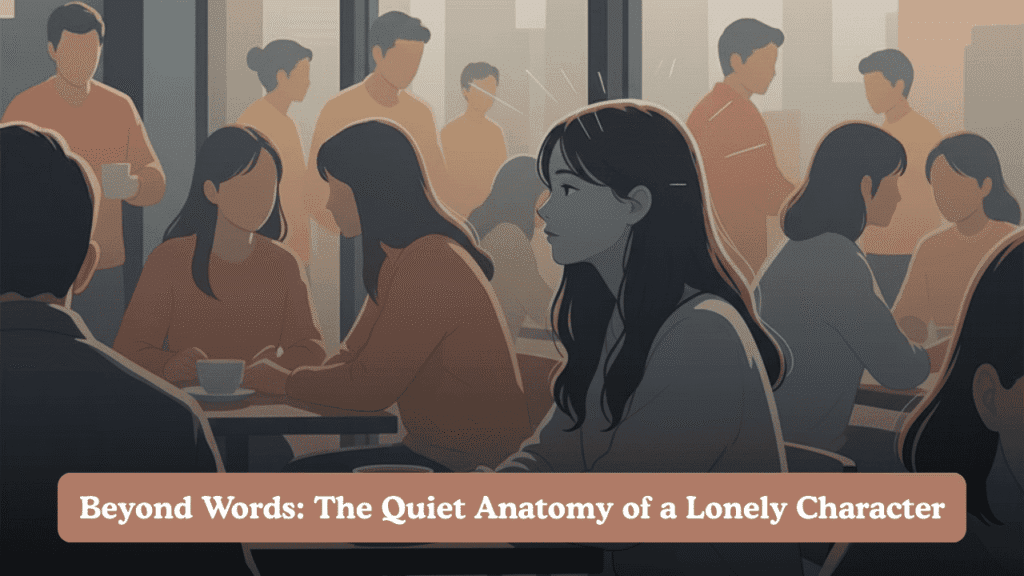
Loneliness is often portrayed as a solitary figure in a dark room, but the most painful kind of isolation happens in broad daylight, surrounded by people. It is the sensation of “drowning in the silence between sentences”. When a character (or a person) doesn’t know how to ask for connection, they begin to communicate through a series of “micro-behaviors” designed to bridge the gap without risking the vulnerability of a direct plea.
The Mask of the “Easygoing” Companion
One of the most common ways loneliness hides is behind a facade of extreme low-maintenance behavior.
The Defensive Laugh
When a lonely person invites others to an event and no one shows up, their first instinct isn’t anger it’s protection. They “laugh it off,” claiming they “didn’t really care anyway”. This is a preemptive strike against pity. By pretending the rejection doesn’t hurt, they attempt to preserve a shred of dignity, even as the silence of the empty room echoes louder.
The Quick Smile and Tired Eyes
There is a specific visual dissonance in someone who is deeply lonely. The post notes that “their smile is quick, but their eyes are slow”. A smile can be a reflex, a social courtesy performed to make others comfortable. However, the eyes tired and watching betray the truth. They are scanning the room, not for entertainment, but for a sign of genuine belonging or an invitation to stay.
The Performance of Belonging
Loneliness often drives people to mimic the rhythms of a group they don’t quite feel a part of.
Laughing at the Unfamiliar
A striking observation is that lonely people will “laugh at inside jokes they weren’t there for”. This isn’t necessarily a lie; it’s a desperate attempt at synchronization. To laugh is to be “in” on something. By joining the laughter, they are trying to feel the warmth of the group’s bond, even if they are only touching the surface of it.
The Deflected Inquiry
Lonely characters are often masters of the “Social Dodge”. They will always be the first to ask, “How are you?” because it shifts the spotlight away from their own internal emptiness. If they answer the question honestly, they might break. If they lie, they feel even more isolated. So, they dodge. They become the ultimate listener, because being a listener means you are present without having to be seen.
The Fear of Stillness
For the lonely, silence is not peaceful; it is a mirror that reflects everything they are missing.
The Busy Signal
The post mentions that they “keep themselves busy” because “loneliness echoes louder in stillness”. Constant activity acts as white noise for the soul. If they are volunteering, helping, or working, they have a “purpose” that justifies their presence in a space.
The Sound of One’s Own Voice
When the world outside goes quiet, some people “talk to themselves. Out loud. Just to hear something”. This is a grounding mechanism. In the absence of a dialogue partner, the sound of a human voice even their own proves they still exist in a physical space. It breaks the crushing weight of a silent home.
The Economy of Connection: Overgiving
Perhaps the most “aching” trait mentioned is the tendency to “overgive”. When someone feels they are not inherently “enough” to make people stay, they try to become indispensable. They volunteer for every task and help every friend, hoping that “maybe someone will need them enough to stay”. It turns friendship into a silent contract: I will be so useful that you cannot afford to leave me.
The Digital Ghost
In the modern age, loneliness lives in our phones. The act of “scrolling through old texts and considering replying” but ultimately choosing not to is a form of digital ghosting—not of others, but of one’s own past. They are looking for evidence that they were once connected, once wanted, and once part of a conversation.
The Final Truth: The Ache to be Chosen
At the heart of all these behaviors is a singular, unspoken desire: “They crave being chosen”. There is a massive difference between being included and being chosen. To be included is to be allowed in the room; to be chosen is to have someone look around that room and decide that you are the one they want to talk to.