
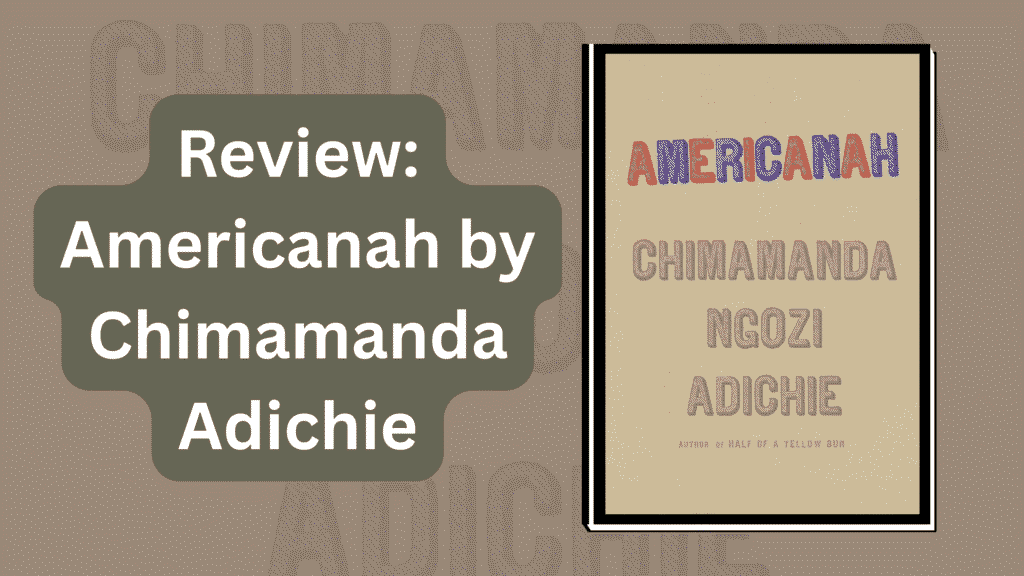
“The only reason you say that race was not an issue is because you wish it was not. We all wish it was not. But it’s a lie. I came from a country where race was not an issue; I did not think of myself as black and I only became black when I came to America.”
by Chimamanda Ngozi Adichie, AmericanahTitle: Americanah
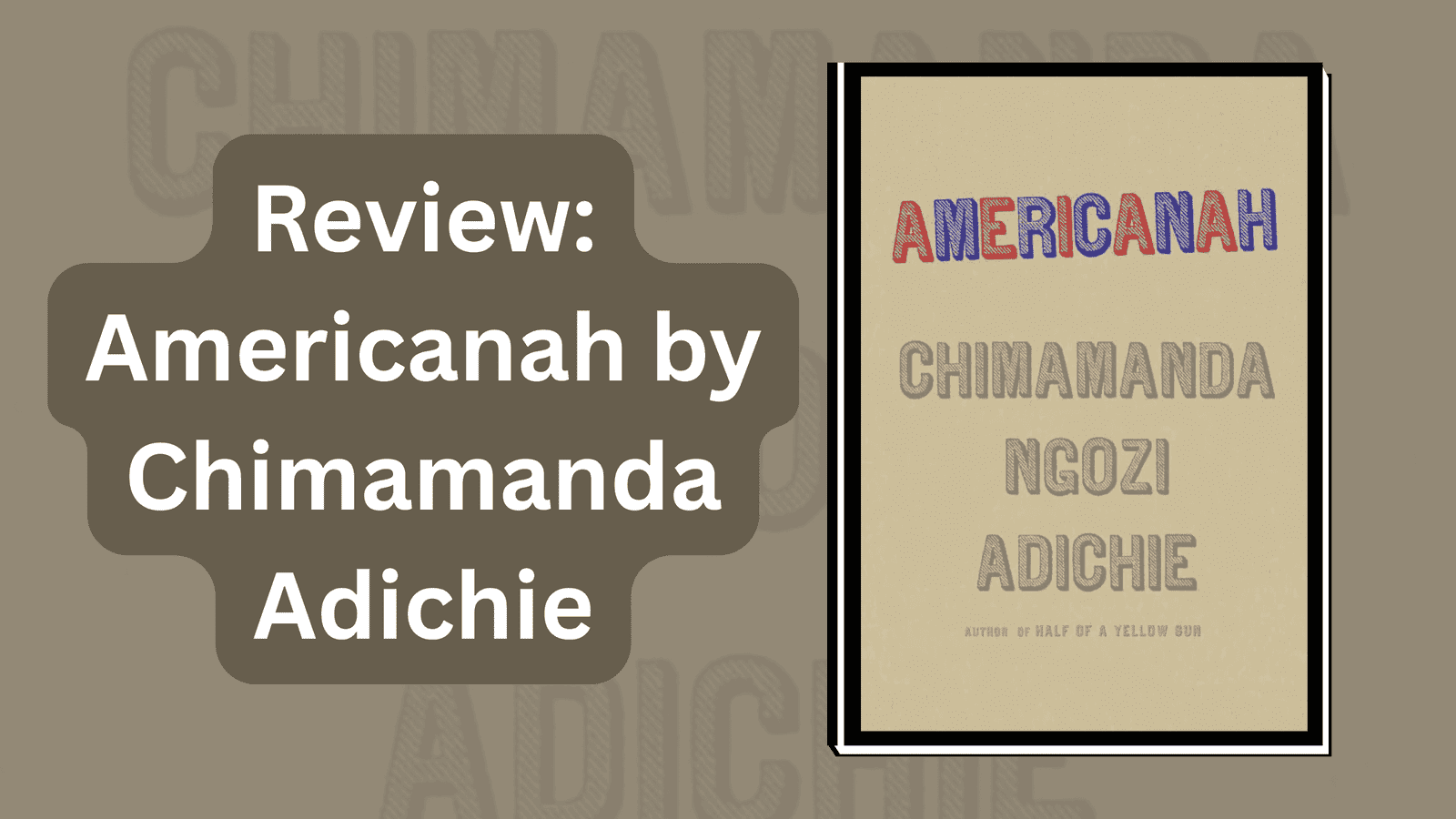
Author: Chimamanda Ngozi Adichie
Published: 2014 (first published 2013)
Publisher: Anchor Books — Random House
Pages: 588
Format: Paperback
Genres: Fiction — Literary fiction, Contemporary fiction
About Author
When I first read Americanah (2013), I could feel the powerful voice of Chimamanda Ngozi Adichie, a Nigerian writer whose novels, short stories, and poems bring the rhythm of Igbo culture to life. Born into an Igbo family in Enugu, Nigeria, Adichie—also known as Grace—grew up surrounded by storytelling. Her academic journey took her from the University of Nigeria, Nsukka, where she studied medicine, to several schools in the United States (U.S.), including Drexel University in Philadelphia, Pennsylvania, Eastern Connecticut State University, Johns Hopkins, and Yale. This mix of Western and African influences shaped her voice as both a literary critic and a book reviewer, allowing her to explore deep human experiences through a global lens.
Her debut novel, Purple Hibiscus (2003), and later Half of a Yellow Sun (2006), revealed her mastery of postcolonial and feminist literature. From the play For Love of Biafra (1998) to the poetry collection Decisions (1997), every piece reflects her sensitivity to themes like religion, immigration, gender, and fashion. Through her TED Talk (2009), “The Danger of a Single Story”, and “We Should All Be Feminists (2012)”—later viewed worldwide and even featured by Beyoncé on a Dior T-shirt (2016)—she challenged stereotypes and inspired a movement. Her Wear Nigerian Campaign (2018) further showed how art can merge with identity. Honored with a Shorty Award, MacArthur Fellowship (2008), and recognition from the American Academy of Arts and Sciences (2017), she continues to receive awards, honours, academic and literary prizes, fellowships, grants, and honorary degrees, proving her place among the finest voices of our time.
Book Summary
When I first read Americanah, I felt deeply connected to Ifemelu, whose adolescence in Nigeria and adulthood in America mirror the journey of many who cross borders in search of meaning. The novel paints a vivid picture of American society, its racist underpinnings, and the inequalities that shape the experiences of a Black immigrant trying to live and work in a new world. Obinze, her high school boyfriend, carries his own quiet strength as he faces anti-immigrant prejudice in the United Kingdom, where survival feels like an act of faith. After a decade away, Ifemelu returns to Nigeria to reevaluate her life, realizing that even after everything, the remnants of love, loss, and belonging never truly fade. Her interest in understanding identity feels as personal to me as it is universal.
Plot
Reading Americanah by Chimamanda Adichie felt like watching real life unfold through layers of race, identity, and belonging. The novel follows Ifemelu and Obinze, two young lovers from Lagos, Nigeria, whose journey across continents explores what it means to seek a home beyond borders. When I first added it to my to-read list, I expected a simple love story, but the story opened into something larger—a reflection on society, culture, and the silent struggles of immigrants in the U.S. and U.K.. Through the characters, I could feel Adichie’s deep insight into humanity and inequality, reminding me of her earlier works like Purple Hibiscus, yet here her voice feels more global, more fearless.
In America, Ifemelu becomes a Non-American Black, realizing how race and blackness define people differently. Her observations—from the store scene with the cashier to the subtle questions about hair and appearance—mirror how Americans, especially White people, often ignore the discomfort of racism. I found myself reflecting on Adichie’s use of narrative authenticity, where small details become mirrors of deep truths. The blog she starts, Raceteenth: Observations About American Blacks (Those Formerly Known as Negroes), becomes a platform for hard discussions on prejudice, discrimination, and privilege, echoing real-world issues around racial equality.
Meanwhile, Obinze’s story in England captures the silent pain of an immigrant life. Unable to work legally, facing suspicion and rejection, his experiences echo those of many who dream of stability but confront Western society’s harshness. His plan to go abroad turns into years of emotional despair, showing the deep inequality in opportunities between nations. When Ifemelu returns to Nigeria, their relationship feels both renewed and fragile, shaped by distance and the weight of their separate worlds. That ending, while understated, left me with a sense of anticipation, as though Adichie wanted us to fill in the emotional silence ourselves.
Beyond the plot, I admired the structure of the book—its nonlinear chapters shifting between past and present, weaving multiple perspectives that highlight thoughts, emotions, and personal growth. The writing balances humor, joy, and despair, allowing readers to move through the narration as if they were part of Ifemelu’s own reflections. Every page, every description, carries a sense of authenticity and careful storytelling that few authors can achieve.
I also appreciated how Adichie doesn’t shy away from broader themes—feminism, misogyny, corruption, religion, even god-fatherism. She threads these into the social underpinnings of Nigeria and America, turning her book into both a review of modern life and a critique of systems that divide people. As a reader, I couldn’t help but admire the analysis, tone, and symbolism embedded in her writing, which blend seamlessly with her storytelling voice.
In my own reading experience, what stayed with me most was the feeling of connection—between continents, between adulthood and adolescence, and between the private world of emotion and the public world of society. Adichie reminds us that the struggle for identity is not just about color or place—it’s about humanity, the constant return to who we truly are, and how love survives through inequality and distance.
Overall Conclusion
Americanah is an insightful and beautifully written novel that addresses a range of important topics in a thoughtful manner. As I reflected on this book, I realized my review could only touch the surface of its depth. I genuinely recommend reading a copy, because it’s the kind of story that stays with you long after you finish it. I don’t regret a single page, and I hope everyone who picks it up will share their thoughts and comments, just as I’ve done, because great stories like this deserve to be discussed and appreciated together.
Some More Reviews
When I first wrote the caraval book review, I realized how linking it with other reviews made my articles more connected and helpful for readers who love exploring similar stories. While diving into the americanah review, I used the same approach—adding internal links to past discussions so readers could easily jump between topics and see how each story connects in theme and emotion. It’s like building a web of shared thoughts where every review supports the next.
My latest holly black review followed this same path, but I took a more personal angle, reflecting on how her magical worlds reminded me of the enchantment I felt while reading Caraval. By internally linking these reviews, not only does it guide readers naturally, but it also improves the overall reading experience—creating a smooth journey across different yet connected pieces of writing.





3 thoughts on “Review: Americanah by Chimamanda Adichie”