
When your child begins their reading journey, they unlock the door to endless adventures and knowledge. As a parent, you play the most important role in their early literacy development. A fundamental part of this journey involves mastering sight words for kindergarten.
These high-frequency words are the building blocks of most children’s books. Helping your young learner recognize them instantly is a key strategy to teach reading to preschoolers effectively. This guide will provide a practical parents guide to understanding these words, offer a clear list to use at home, and share engaging preschool activities to make learning fun.
What Are Sight Words?
Sight words for kindergarten, often called high-frequency words, are common words that appear over and over in our reading material. Interestingly, a small group of these words makes up a very large percentage of the text in children’s books. The goal is for children to recognize them “on sight”—instantly and without needing to sound them out.
There are two primary lists that educators use:
- The Dolch Word List: Developed by Dr. Edward Dolch, this list is broken down by grade level. The pre-primer sight words and primer list are most relevant for kindergarteners and early readers.
- The Fry Word List: This more modern list by Dr. Edward Fry is based on the most common words found in reading materials across all ages.
Many of the words on these lists do not follow standard phonetic rules (e.g., “the,” “was,” “said”). This is why phonics for preschoolers, while crucial, isn’t enough on its own. A dual approach that combines phonics games with sight word recognition is the most effective method for preschool reading instruction.
Why Are Sight Words So Important?
Mastering sight words for kindergarten offers several powerful benefits for young readers:
- Builds Fluency: When a child doesn’t have to stop and decode every single word, their reading becomes smoother, faster, and more expressive. This fluency is a critical component of reading readiness.
- Boosts Confidence: There’s nothing quite like the confidence boost a child gets from effortlessly reading a whole sentence or page. This success motivates them to keep trying and see themselves as confident readers.
- Aids Comprehension: By automatically knowing the most common words, a child can free up mental energy to focus on understanding the meaning of the story, strengthening their narrative skills.
- Provides a Foundation: These words are the essential framework upon which more complex reading skills are built, ensuring school readiness.
The Kindergarten Sight Word List
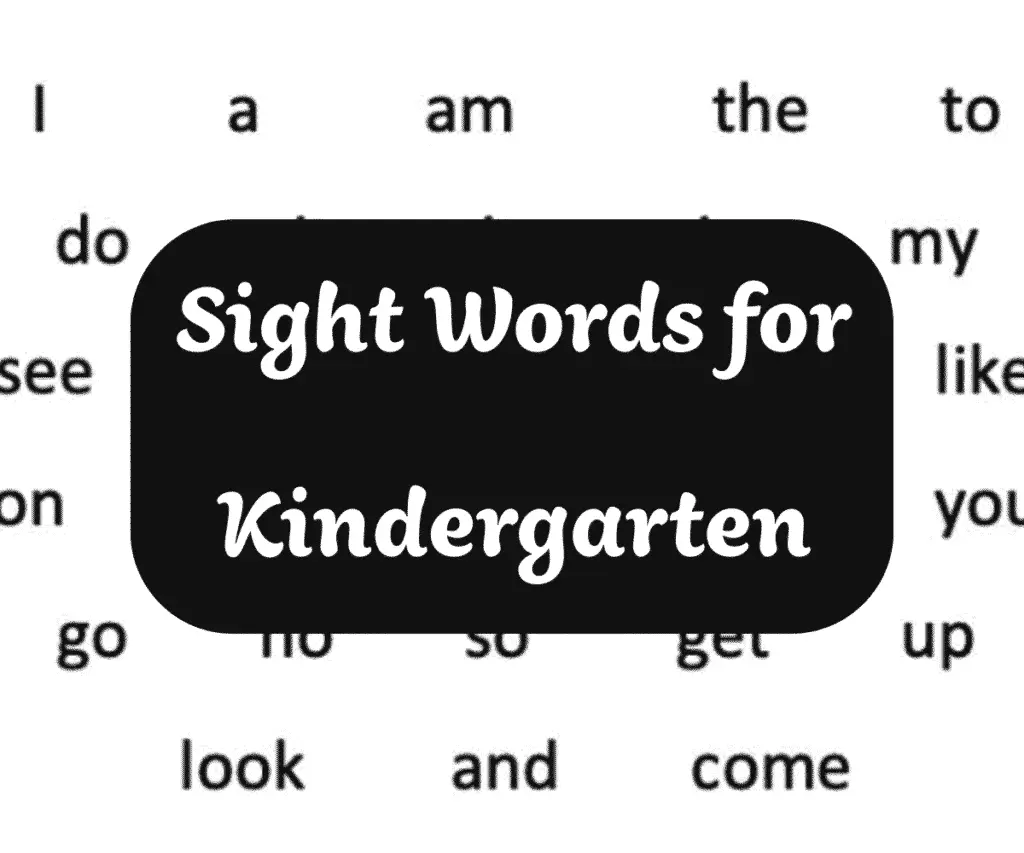
Here is a list of common sight words for kindergarten, primarily derived from the Dolch pre-primer and primer lists. This collection is an excellent starting point for your homeschool preschool efforts or for supplementing your child’s preschool curriculum.
a
all
am
and
are
at
ate
be
big
blue
can
come
did
do
down
eat
find
for
four
get
go
good
have
he
help
here
I
in
is
it
jump
like
little
look
make
me
must
my
no
now
on
our
out
please
pretty
ran
red
ride
run
said
saw
say
see
she
so
soon
that
the
there
they
this
to
too
under
up
want
was
we
well
went
what
where
white
who
will
with
yes
you
How To Teach Sight Words: Tips & Strategies
Understanding how to teach reading to preschoolers requires patience, positivity, and a lot of creativity. Here are some effective strategies for teaching sight words for kindergarten.
1. Start Small and Celebrate Progress
Avoid overwhelming your child. Begin with just two to five words at a time. Use flashcards or write them on a whiteboard. Celebrate enthusiastically when they recognize one! This positive reinforcement makes learning a joy and helps foster a love of reading.
2. Keep It Short and Sweet
Formal lessons should be brief—5 to 10 minutes is perfect for young learners. Short, daily practice is far more effective than longer, sporadic sessions. This fits perfectly into learning at home routines.
3. Embrace a Multi-Sensory Approach
Children learn best by doing. Multi-sensory activities engage more than one sense at a time, helping to cement the learning. This is also known as tactile learning.
- Trace words in a tray of sand, salt, or shaving cream.
- Build words using playdough, magnetic letters, or blocks.
- Write words with chalk on the driveway or with a finger in the air.
4. Make It a Game
Play-based learning is the engine of early childhood education. Turn drill into fun:
- Play “Swat the Sight Word” by spreading flashcards on the floor and having your child swat the word you call out with a fly swatter.
- Have a “Sight Word Scavenger Hunt” where they find words hidden around the room.
- Word family activities, like finding words that rhyme with “at” or “an,” can also reinforce patterns.
5. Integrate Reading Aloud
Reading aloud is one of the most powerful tools for early literacy development. Make it interactive reading:
- Choose a book and point out target sight words as you read.
- Ask your child to be the “sight word detective” and circle every “the” or “and” they see on a page (using a dry-erase marker if it’s a plastic sheet protector).
- Dialogic reading—where you ask questions about the story—not only checks comprehension but also provides natural opportunities to highlight sight words.
Fun Activities for Practicing Sight Words
Here are some concrete preschool activities to make practicing sight words for kindergarten engaging.
1. Sight Word Jump
Write sight words on sticky notes and place them on the floor in a path. Call out a word and have your child jump to it! This gets their whole body involved in learning.
2. Magic Word Painting
Write a sight word with a white crayon on white paper. Then, let your child watercolor paint over the paper to magically reveal the word!
3. Building Words
Use letter stamps, alphabet cookies, or Scrabble tiles to build target words. This combines letter recognition and fine motor skills practice.
4. Create a Print-Rich Environment
A literacy-rich environment is key. Label common objects around the house (e.g., “door,” “window,” “chair”). This constant, casual exposure reinforces print awareness and makes words familiar.
The Bigger Picture: Fostering a Love of Reading
While mastering sight words for kindergarten is a critical core skill, the ultimate goal is to nurture lifelong learners who read for pleasure and purpose. The strategies outlined here—shared reading, guided reading, playful games, and positive encouragement—all contribute to this larger mission.
Remember, every child learns at their own pace. The journey of how to teach reading to preschoolers is meant to be a joyful, connected experience. By integrating these words into playful, daily interactions, you are not just building a reader; you are building your child’s confidence and unlocking a world of possibilities for them.Words for Kindergarten is an investment in a child’s lifelong love of learning and reading.
4 thoughts on “Sight Words For Kindergarten: The Ultimate Guide for Parents & Teachers”