

About Niall Williams
The quiet beauty of This Is Happiness, its focus on rain, love, and rural Ireland, makes perfect sense when you understand the life of its creator. Niall Williams, (born 1958), is an Irish writer of novels, plays, and non-fiction, known for his exquisite literary voice that often dips into magic realism. His path wasn’t always clear: he was born in Dublin, Ireland, in 1958, but though his parents’ home was not filled with books, his father would take him to Pembroke Library every two weeks to encourage reading, nurturing his interest in the Genre of Fiction.
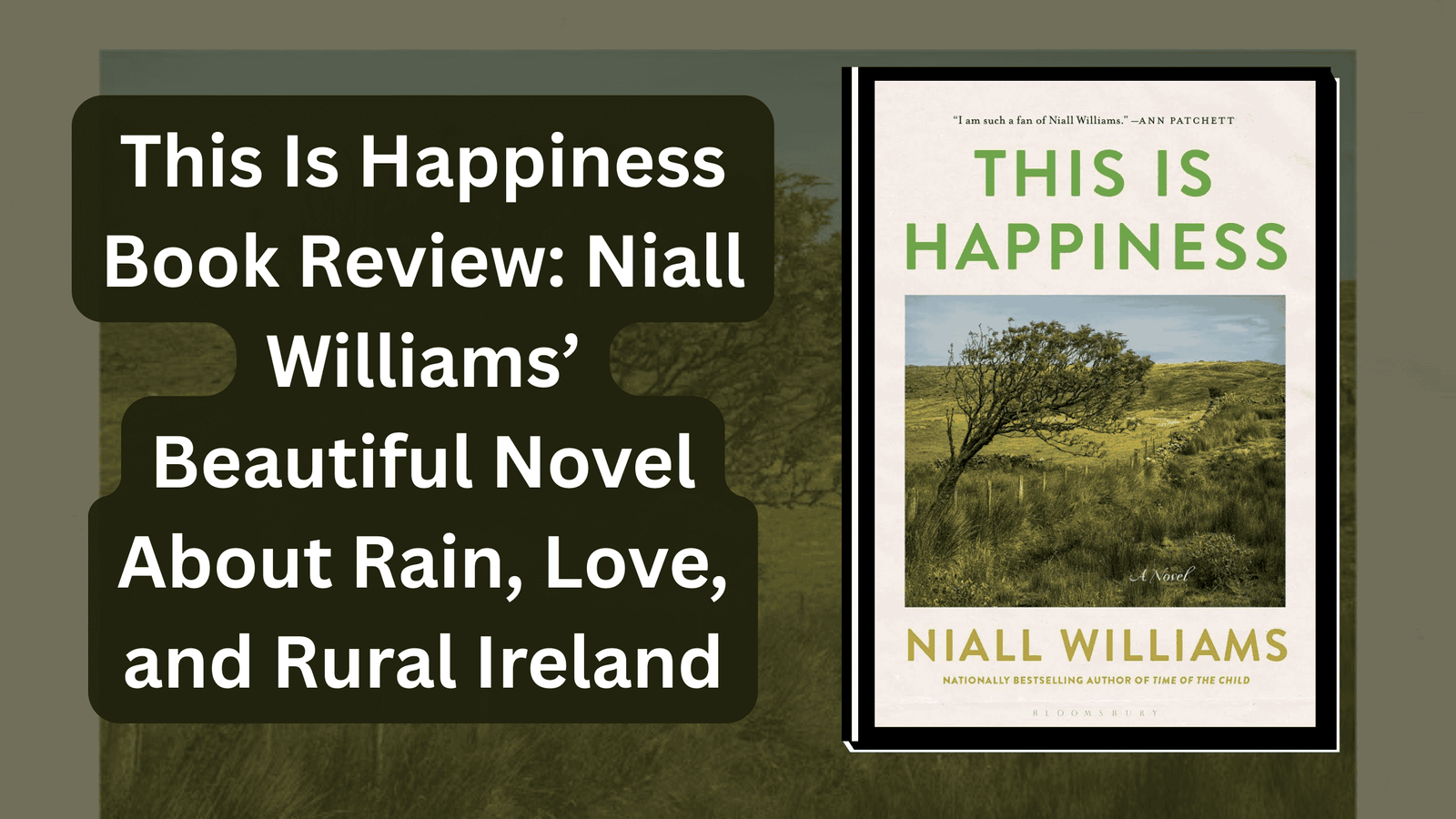
He pursued his Education at Oatlands College, a boys’ school in Stillorgan, County Dublin, and later earned a Masters of Arts in Modern American literature at his Alma mater, University College Dublin, where he met his Spouse, Christine Breen. Williams’ first published story was printed in The Irish Press when he was eighteen, and a cheque for his first story, and a nod of approval, was the confirmation he needed from the world to dedicate his life to writing. This early ambition led him to an Occupation that spans Novelist, playwright, screenwriter, solidifying his Career trajectory, which includes his Notable works like History of the Rain (2014) and This Is Happiness (2019).
Williams’ journey from the city to the countryside is crucial to his work. He initially spent five years in New York City (with Breen) after lecturing in France, working briefly at Fox and Sutherland’s bookstore in Mount Kisco, New York, before becoming a copywriter at Avon Books. However, in 1985, Williams and Breen returned to Ireland and moved to Kilmihil, County Clare, and began co-writing factual accounts of life in rural Ireland. This shift from the fast pace of New York back to the slow, atmospheric reality of the country a focus that makes his historical fiction so evocative is the very tension that makes his work, including Four Letters of Love (1997) and As It Is In Heaven (1999), resonate so deeply. The full list of his earlier works also includes Fall of the Light (2001) and Fall of the Light (2008).
PLOT of this is happiness
My return from a blogging hiatu driven by a lot happening in my life of late, including a dear and close loved one dealing with this awful disease of Cancer in our family made picking up Niall Williams’ This is Happiness the perfect book to review. The novel’s core message the simple truth that you were alive to say it resonated deeply, especially during the time of covid, which has made everything harder, including cross border travel. This personal experience reminded me to never take life for granted and that there is a lot we can learn about living in dying. It’s difficult to juggle everything, and this Paperback book, This is Happiness, by Niall Williams, in front of an indoor plant, (triostar stromanthe), felt like balm for my spirit, which has been difficult and thrown me off balance, opening up some old wounds.
Williams’ novel is set in 1950s Faha, a fictional town set in County Clare, Ireland. The story, set in 1958, focuses on Noe Crowe, a 17-year-old who is sent to Faha to live with his grandparents, Doady and Ganga, after the death of his mother and having rejected seminary school. Noe, short for Noel, feels like an outsider to the community because his abstinence from church marks him as distant from grace. Faha is on the cusp of change: electricity and phone lines encroach on family and rural life, challenging the way people communicate and how they structure their lives. This burgeoning electrification of the world forces a re-evaluation of community values and pastoral bliss. Williams’ narrative is a gentle challenge to the era in which novels often stress the hardships and trauma of modern living, instead offering a celebration of the close, quirky, affectionate people of Faha. The novel is predominately written from the perspective of Noe, giving him a unique perspective on the relationships in this small rural town.
The plot’s gentle momentum begins when the rain stops, followed by the momentous coming of the light (electricity). The introduction of electricity and a telephone gets installed in Noe’s home instantly changes the atmosphere; 100-watt bulb was too bright for Faha, forcing people to see the world and themselves in mirrors (Tom Clohessy couldn’t keep mirrors in stock) for the first time with merciless illumination. This setting forms the backdrop for the arrival of the second main character, 60 year old lodger Christy, an elder and friend to Noel. Christy is a world-travelled man adrift in the country generally, seeking to atone for past events specifically, to express remorse to the woman he left at the altar a half century earlier. This love, puppy in one case, and remorseful, in another, is thwarted. Noe tries to hasten an outcome but learns about the fickleness of youthful desire and the impenetrability of the class system.
The novel is characterized by its meandering nature, not being real strong on plot, but focusing on tiny things, significant in their tininess. The storytelling itself is a key theme, with Ganga choosing the baroque style long, convoluted, and meant for passing the time and dissolving the hours of dark over the plain style. The biggest event, when Noe is nearly crushed by a falling electricity pole and awakens with his two wrists tightly bandaged in the office of Doctor Troy, becomes an occasion for Ganga to relate a wandering convoluted story. Noe later encounters Doctor Troy’s three beautiful swan daughters, who become objects of his devotion. Outsiders also appear, like Mr. Rushe, the boss man of the electricity installation, who bullies Noe after the accident, and the nun Mother Acquin, who, as a friend of Noe’s dead mother in Heaven, seeks to stiffen his faltered vocation upon hearing he left seminary school.
The title’s meaning is revealed when Noe and Christy are searching for Junior Crehan, a legendary fiddle player. Christy tells Noe that “this, is happiness,” explaining that it meant: you could stop at, not all, but most of the moments of your life, stop for one heartbeat and, no matter what the state of your head or heart, say “This is happiness,” because of the simple truth that you were alive to say it. This philosophy that life is about being here now and recognizing the wonder and joy of breathing is the novel’s deepest theme. Williams’ book starts with an uncanny change in weather: the rain stops, and with clear blue skies comes new clarity and perspective, changing Faha forever. It is a slow read that forces you not to rush and savour every word, focusing on human goodness rather than a “full share of villains”.
The book has been longlisted for the Walter Scott Prize for Historical Fiction (2020). Though I found the slow pace of village life and the narrative style sometimes less inclined to pick it up, this atmospheric novel has a deep emotional core. I was curious to see how it would be to read a Niall Williams novel today, remembering the utter pleasure of reading Four Letters of Love in London in 1997. Although I myself am seventy-eight years old and Noe’s story is telling here of a time over six decades ago, the novel’s focus on appreciating the present moment is timeless. I do recommend it and, despite the 126 words in the final quote, I understand why it has a significant number of 5 star reviews. As Patrick T. Reardon noted, the novel is full of detours and backward glances and is centrally preoccupied with time itself.
continue reading
- Tom Lake Book Review by Ann Patchett || A Ponderous Look at Past Love, Secrets, and Mother-Daughter Relationships
- Tomorrow and tomorrow and tomorrow Review: Love, Loss & Games
- We Were Liars Ending Explained: Book Twist vs. TV Show
- Sinclair Family Tree: We Were Liars’ Inheritance Conflict
- The Woman in Cabin 10 Review: Is It WortAh the Hype?
- A. J. Fikry Review: Why This Book Will Mend Your Heart
- Thirteen Reasons Why: The Mystery & Impact of Hannah’s Story

3 thoughts on “This Is Happiness Book Review: Niall Williams’ Beautiful Novel About Rain, Love, and Rural Ireland”