
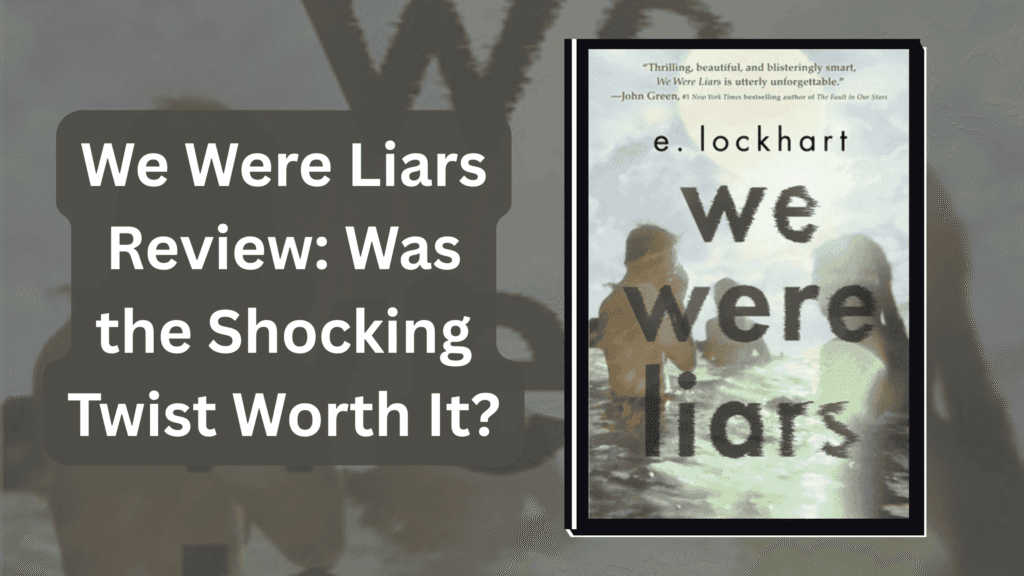
Lockhart’s We Were Liars is a contemporary young adult mystery centered on the wealthy, seemingly perfect Sinclair family, who spend every summer on their private island. The story is narrated by Cady, one of the four “Liars” cousins and a friend who suffer a mysterious trauma during a summer she cannot fully recall. As Cady returns two years later, she attempts to uncover the truth about the tragic incident that occurred on the island and the dark secrets the Sinclairs desperately try to conceal. The book ultimately explores the high cost of privilege, family secrets, and culminates in a devastating, unexpected twist.
E. Lockhart’s We Were Liars is a contemporary young adult mystery that centers on the wealthy, deeply flawed Sinclair family and their summers spent on the private Beechwood Island. The story follows Cady, one of the four “Liars,” as she tries to recover memories of a mysterious accident that occurred two years prior. The narrative is defined by its unreliable narrator, poetic prose, and themes of guilt, privilege, and the secrets that destroy families. It is known for its intense emotional atmosphere and a devastating, unforgettable final twist.
Overall Rating: ⭐ 4.5 / 5 stars
Book Details
Book Title: We Were Liars
Author: E. Lockhart
Genre: Young Adult / Contemporary / Psychological Mystery
Publisher: Delacorte Press
Publication Date: May 13, 2014
Pages: 227 pages (may vary slightly by edition)
Ideal Age Range: Young Adult (14+)
Spoiler Free Summary
E. Lockhart’s We Were Liars is a haunting contemporary mystery set on Beechwood Island, the exclusive, privately-owned summer estate of the ultra-wealthy Sinclair family. The Sinclairs are defined by their staggering privilege and their adherence to a superficial perfection—a “no mistakes” facade maintained at all costs. Every summer, the extended family gathers, bringing together the four cousins known as “The Liars”: Cady, Johnny, Mirren, and Gat. These four are inseparable, bonded by their inherited privilege and shared disdain for their family’s often-ugly dramas.
The central main conflict begins when the narrator, Cady, returns to Beechwood for the first time in two years after suffering a mysterious head injury during “Summer Fifteen.” She recalls almost nothing about that summer, only fragments of a massive fire and a debilitating sense of emotional and physical pain. Her family is frustratingly vague and overly solicitous, refusing to discuss the event and urging her to “just move on.” The stakes are immediately high for Cady: she needs to recover her memory not only to understand the trauma but to uncover the truth of what happened to her and The Liars during that forgotten summer.
As Cady begins to reconnect with Gat, Johnny, and Mirren, they refuse to answer her questions directly, instead prompting her to remember on her own. Driven by increasing paranoia and fragmented memories, Cady starts her own investigation. She observes the current tensions among the older Sinclairs, specifically their petty, vicious fights over inherited properties and money. Cady realizes the accident two years ago was intrinsically linked to the family’s deep-seated conflicts and their obsession with material wealth. The mystery deepens as Cady starts to experience headaches and strange hallucinations, leading her to believe that the key to unlocking the truth lies in the burnt remains of the family house, Clairmont, which was destroyed in the Summer Fifteen fire.
Character Breakdown
The story of We Were Liars revolves around the complex dynamics of the wealthy Sinclair family, focusing primarily on the four cousins who call themselves “The Liars.”
The Liars
Cady (Cadence Sinclair Eastman)
- Role: The protagonist and primary narrator of the novel.
- Key Traits: Unreliable narrator, introspective, haunted, observant, privileged, and driven by confusion.
- Motivation/Conflict: Cady returns to Beechwood Island two years after an accident during “Summer Fifteen” left her with severe headaches and amnesia regarding the event. Her sole motivation is to remember what happened and piece together the tragic history of her family and the Liars. Her narration is often poetic, reflecting her emotional turmoil and fragility.
Gat (Gatwick Patil)
- Role: The friend of the cousins (nephew of Carrie’s boyfriend) and Cady’s main romantic interest.
- Key Traits: Thoughtful, outsider, politically and socially conscious, and intellectually challenging.
- Motivation/Conflict: Gat is the “other” in the Liars group—he is not a Sinclair by blood, which allows him to see the family’s deep-seated flaws and privilege clearly. He challenges Cady’s passive acceptance of the Sinclair wealth and is often the voice of moral complexity. His relationship with Cady is central to the summer’s events.
johnny (Jonathan Sinclair)
- Role: One of the cousins, son of Aunt Bess.
- Key Traits: Energetic, reckless, quick to anger, and focused on physical activity.
- Motivation/Conflict: Johnny acts as the group’s muscle and is often the most straightforward and least introspective of the Liars. He is primarily motivated by action and rebellion against the Sinclair’s stifling rules and expectations.
Mirren (Mirren Sinclair)
- Role: One of the cousins, daughter of Aunt Penny.
- Key Traits: Witty, kind, diplomatic, and focused on maintaining harmony within the Liars.
- Motivation/Conflict: Mirren is perhaps the most sensitive and outwardly concerned with appearances. She attempts to mediate conflicts and often expresses a deep desire to keep the Liars together, reflecting a fear of change and disruption.
The Patriarch
Harris Sinclair
- Role: The grandfather and patriarch of the Sinclair family.
- Key Traits: Controlling, highly judgmental, obsessed with appearances, and defined by his wealth.
- Motivation/Conflict: Harris is the silent, dominating force over the entire family. His wealth and the promise of his inheritance are the primary drivers of the daughters’ actions and their resulting conflicts. His obsession with maintaining the family’s image of perfection and keeping the island intact fuels the tensions that ultimately lead to the tragic events of “Summer Fifteen.”
Key Themes & Messages
We Were Liars uses its gripping mystery and isolated setting to explore profound themes related to privilege, guilt, and the deceptive nature of appearance.
The Corrupting Nature of Wealth and Privilege
The Sinclair family epitomizes the dark side of inherited wealth. The book suggests that extreme privilege can corrupt, isolating the family from reality and fostering an environment of petty greed.
- Message: Wealth does not equal happiness or moral superiority. Instead, it creates a toxic environment where the adults, driven by inheritance, become cruel and shallow, setting a terrible example for their children.
The Unreliability of Memory and Narrative
The entire plot hinges on Cady’s amnesia and her attempt to piece together the truth of Summer Fifteen. This highlights how easily memory can be suppressed, altered, or fabricated, especially when dealing with trauma.
- Message: The truth is subjective and often painful, and we sometimes lie to ourselves (or others) to survive emotional or physical trauma. The fragmented narrative structure directly reflects Cady’s struggle to trust her own mind.
Guilt, Grief, and Emotional Trauma
The novel is saturated with a heavy atmosphere of guilt and unresolved grief. Cady’s crippling headaches and emotional fragility are direct physical manifestations of the unaddressed trauma she and the other Liars experienced.
- Message: Suppressing traumatic events does not make them disappear; it only leads to deeper psychological wounds. The Liars’ shared secret and suffering become a collective burden that warps their reality.
Appearance vs. Reality
The Sinclair family is obsessed with presenting a perfect, flawless image to the world, exemplified by their unofficial motto: “Be a credit to the family.” This facade cracks under the pressure of their internal disputes and the consequences of their arrogance.
- Message: External beauty and perfection often mask internal decay and dysfunction. The beautiful island and houses are a stark contrast to the ugly truths and moral failings of the family living within them.
PLOT Of we were liars
The plot of We Were Liars is a spectacularly woven mystery that starts simply: Cadence Sinclair Eastman, the eldest granddaughter and protagonist, is returning to Beechwood island, the private paradise of her wealthy family. The setting is immediately atmospheric and secluded. She arrives two years after Summer 15, a summer defined by a traumatic accident. Since then, Cady has been suffering from debilitating headaches and memory loss, the physical manifestation of amnesia and possible PTSD. Her mission is simple: to remember the truth and discover the secrets the rest of the Sinclairs refuse to share.
The central dynamic is the bond between “The Liars” Cady, her cousins Johnny and Mirren (Merrin), and Gat, the nephew of one of the daughters’ boyfriend. Gat is the outsider, whose perspective immediately throws the family’s perfection into sharp relief. Cady is utterly determined to piece together the past the forgotten events but her experiences are painful; she suffers excruciating pain while recollecting the missing clues. Her investigation shows the division in the family, driven by the grandfather, Harris, a controlling Grandad who is the ultimate source of money and control. The four daughters (and their sons-in-law) constantly vie for his inheritance, showcasing their greed and pretentiousness.
As the protagonist delves deeper, she finds that the traumatic accident and the fire that burned the Clairmont house are intrinsically linked to the hatred and division among the generations. Cady is forced to re-read the story of the Sinclairs’ obsession with their façade of perfection. The stakes rise as her efforts at recovering her memory are met with cryptic hints or outright suppression from the other Liars. She knows the key to unraveling the mystery lies in the remnants of Clairmont and the cryptic map of the island she finds.
Thematic Depth and Narrative Style
This young adult novel is far more than a simple mystery; it is a psychological thriller and a critique of the American elitism and class. The Sinclairs are distinguished on the surface, but Gat points out that they are often empty-headed and selfish. The family is supposed to be progressive and liberal, yet they show intense discrimination when Gat’s uncle makes a proposal that challenges their traditionalist values, highlighting their hypocrisy. This focus on sensitive topics makes the book powerful and subtle. The conflict is not just about the fire, but about the systemic guilt and shame that pervades the entire clan.
E. Lockhart’s poetic writing style is what truly elevates the book. The prose often turns metaphorical (metaphors) and dreamy, reflecting Cady’s unstable mental state. The narrative is a constant, heart-pounding source of suspenseful tension, moving at a quick pace. For a YA novel, it has incredible depth and nuances, making it a true page-turner. It’s easy to get hooked from the beginning because the narrator comments on the story in a way that is immediately engaging. I find myself appreciating the haunting and atmospheric feel, much like the intense focus on emotional trauma I experienced when reading It Ends With Us book review.
The Twist and the Unforgettable Impact
The VERY BIG ending is where all the plot twists and emotional trauma fits together. As a heavy consumer of psychological thriller novels, I thought I was unpredictable and had the question of the mystery solved. The moment of realization is truly mind-blown and shocking you feel the immense grief and sadness of Cady and the other Liars. The initial Amazon blurb warns you to LIE about the spoiler because the final revelations are everything. You realize that Cady’s selective amnesia was a complex coping mechanism to survive the hidden pain.
The twist reveals the huge mistakes made that summer, and the true cost of their rebellion. The emotional impact is devastating, making the experience heartbreaking. It’s a moment that forces you to reread the entire story to find the obvious signs and subtle clues you missed. The emotional bond between the cousins makes their guilt feel even heavier. The unforgettable nature of the ending rivals the shocking reveals in books like listen for the lie book.
The Verdict: A Necessary Critique
This review concludes that the shocking twist is absolutely worth the journey. The poetic style and over-dramatic nature of the narration style perfectly capture the self-absorbed world of the Sinclairs. Their pursuit of the perfect family image masks a rotten core, a theme that remains timeless. The value of this YA book lies in its unflinching look at privilege.
When you look at a wonder book review, the core message is empathy; We Were Liars provides the counterpoint, showing what happens when empathy is abandoned for inheritance and material obsession. This book is worth reading and I’m always recommending it. I’m excited for the day the Prime Video series comes out, as the material is ripe for adaptation. You might also want to follow a blog to see the comparison of this novel to other hits like yellowface book review.
Parent / Teacher Guide
We Were Liars is a powerful text recommended for readers aged 14 and up (High School/Young Adult) due to its mature subject matter and complex narrative structure. It is an ideal book for literary analysis and ethics discussions in an educational setting.
Age Appropriateness and Sensitive Themes
While the book contains no explicit sexual content or excessive language, it delves deeply into several sensitive and heavy thematic areas that require mature guidance:
- Psychological Trauma: The core of the story is the narrator, Cady, coping with amnesia, headaches, and the symptoms of PTSD following a traumatic accident. This provides a strong opportunity to discuss how the mind and body handle severe grief and shock.
- The Corrupting Nature of Privilege: The novel is a stark critique of elitism and the Sinclairs’ toxic fixation on wealth and perfection. The adults’ greed and infighting over inheritance directly lead to tragic consequences, which is an excellent starting point for ethical discussions on class and morality.
- Guilt, Lies, and Denial: The book explores how the entire family participates in a massive act of denial and suppression, refusing to acknowledge the truth of what happened. This can lead to valuable conversations about the difference between a white lie and emotional manipulation.
Discussion Questions for Book Clubs and Classrooms
These open-ended questions are designed to encourage deeper analysis of the book’s complex layers and literary devices:
- The Liars’ Motivation: The Liars (Cady, Gat, Johnny, and Mirren) commit a huge mistake in Summer 15. Was their intention to hurt anyone, or was their action a reckless rebellion against the family’s repressive atmosphere and Harris’s control?
- The Role of Setting: How does the isolated setting of Beechwood Island a supposed “paradise” serve as a metaphor for the Sinclairs’ detachment from the real world? How would the events have played out if the family lived in a regular neighborhood?
- Unreliable Narration: What specific moments or hints early in the narrative signal that Cady may be an unreliable narrator? How does E. Lockhart’s poetic prose and dreamy style help conceal the truth from the reader?
- Gat as the Outsider: Gat is the only one of the Liars not born a Sinclair. How does his perspective as an outsider allow him to see the hypocrisy and flaws of the wealthy family more clearly than the cousins themselves?
- The Inheritance Conflict: The daughters’ obsession with their Grandad’s money and house creates constant division. How does the novel suggest that privilege leads to moral decay rather than happiness?
- The Power of the Twist: The novel is famous for its shocking twist. Did you feel that the revelation was emotionally earned by the plot, or did it rely too heavily on the surprise factor? Discuss the literary impact of the final revelations.
- Coping Mechanisms: Cady suffers from amnesia. In contrast, the adult Sinclairs use denial and silence. Which form of suppression do you think is ultimately more destructive, and why?
Author Background
E. Lockhart is the pen name of writer Emily Jenkins . She is a highly acclaimed American author known for her distinctive narrative voice and willingness to explore dark subjects within the Young Adult genre. Her literary style is characterized by a strong, intellectual bent, incorporating poetic prose and complex narrative structures that often challenge the reader a quality that makes her work stand out in the crowded YA market. Before We Were Liars (2014), Lockhart was known for The Disreputables series and her National Book Award finalist, The Nature of Jade. Her later novel, Genuine Fraud, is often cited as a thematic successor, as it also heavily utilizes the device of an unreliable narrator and a psychological plot to explore dark subjects like privilege, identity, and deceit. The immense success of We Were Liars is due to this signature approach: taking a classic mystery structure and layering it with deep thematic critique.
Final Authority & Conclusion
We Were Liars is an essential young adult novel that successfully blends the addictive nature of a high-stakes mystery with the depth of a serious literary critique. My rating of 4.5 out of 5 stars reflects its success in creating an unforgettable, atmospheric experience. The book’s lasting power comes not only from the genuinely shocking twist that reveals the devastating truth of Summer Fifteen, but also from its unflinching examination of the corrupting nature of wealth and the devastating emotional grief that family secrets conceal. It’s a masterful, psychological thriller that forces readers to question everything they read, making it a definitive modern classic.
Frequently Asked Questions
What kind of book is We Were Liars?
It’s classified as a YA Psychological Mystery and a contemporary literary thriller. The story is known for its highly poetic prose, atmospheric private island setting, and dark themes involving privilege, trauma, and family secrets surrounding a tragic accident.
What is the recommended age range for We Were Liars?
The book is generally recommended for older Young Adult readers, specifically 14 and up. Due to its exploration of complex emotional grief, the psychological effects of amnesia, and intense moral ambiguity, it is best suited for high school students.
Who are the main characters, “The Liars”?
The core group, known as “The Liars,” consists of four cousins who spend every summer together on the island: Cadence (Cady), Johnny, Mirren (Merrin), and Gat. Cady is the protagonist and narrator who suffers from memory loss after the accident.
Does We Were Liars have a big twist ending?
Yes, the novel is famous for having a VERY BIG shocking twist in the ending that forces the reader to question every detail of the story told by Cady. Readers are strongly advised to avoid spoilers to maximize the emotional impact and the heartbreaking nature of the final revelations.
Is there a movie or TV show adaptation of We Were Liars?
A television series adaptation of We Were Liars is currently in development with Amazon Prime Video. While an official release date has not been announced, the project aims to bring the unforgettable story and shocking twist to the screen.

9 thoughts on “We Were Liars Review: Was the Shocking Twist Worth It?”